
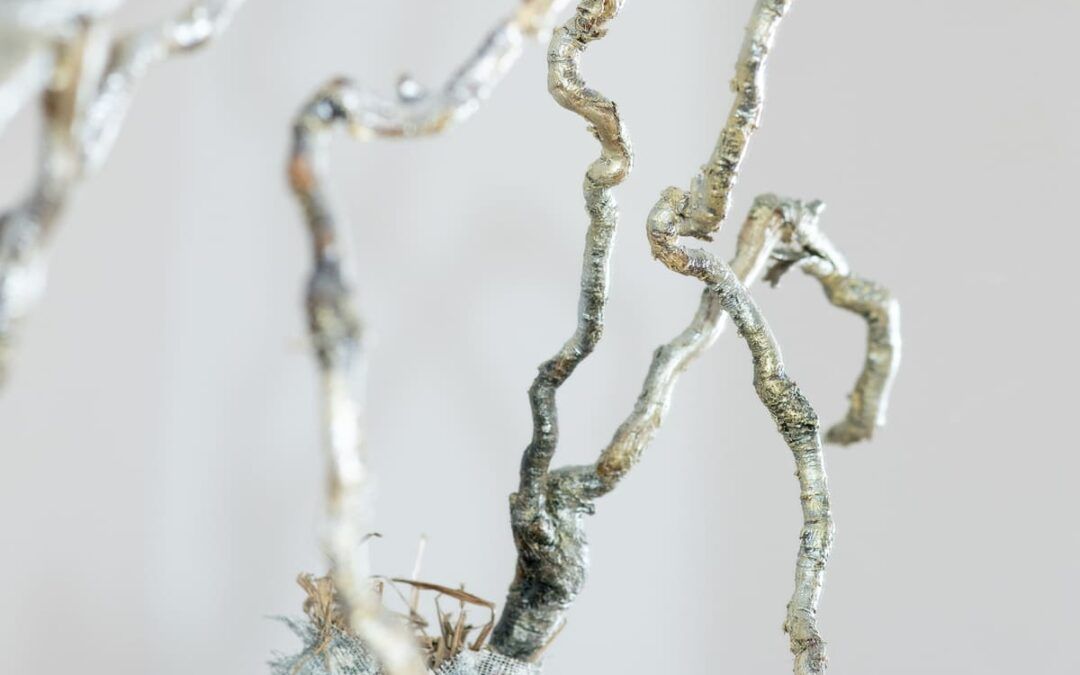
The fascinating world of abstract sculptures is attractive because of the volume and mass that is transformed into pure art. Each creation has a geometry and dynamism, unique to each piece along with authentic symbolism.
Next, get to know the work of the artist Núria and decide to explore and be inspired by taking as a reference each work full of inspiration and resilient art, follow the post to learn more details!
What are abstract sculptures?
It represents one of the deepest ruptures in the history of art, abandoning the imitation of reality to explore the pure language of forms.
Unlike traditional sculpture, which sought to replicate the human figure or elements of nature, abstraction focuses on the very essence of materials and spatial sensations.
In this style, the artist Núria does not try to tell a literal story, but rather provoke an emotional or intellectual response through concepts such as volume and balance.
By eliminating the figurative referent, abstract sculptures allow mass and emptiness to interact in previously unthinkable ways. It’s not about “what” the piece is, but rather “how it inhabits” the space.
This current uses geometry and organic lines to build a dialogue with the viewer, where light and shadow on the surfaces become the true protagonists of the work. And among its features are:
The domain of pure geometry
Geometry is the fundamental pillar in many abstract works, using mathematical structures to achieve visual perfection. The artist uses cubes, spheres and pyramids to organize chaos. By manipulating these shapes, absolute control over volume is achieved, creating pieces that defy logical and rational perception.
Fluidity in modern space
Fluidity allows a sculpture to appear to be in constant movement despite its material rigidity. In the works of the sculptor Núria, for example, you can see how the lines slide smoothly, eliminating sharp edges. This technique softens the mass, allowing the work to breathe and integrate.
Dynamism and visual energy
The dynamism in abstraction injects a sense of force and speed into the inanimate object. By tilting the planes and using tense curves, the artist makes the abstract sculptures appear ready to explode or move, transforming the static mass into a vibrant energetic experience.
Volume as a sensory language
Volume doesn’t just take up space; communicates weight and presence. In abstract sculptures, the play between solid parts and holes defines the character of the piece. By balancing geometry with empty space, a depth is created that invites the viewer to constantly surround the work.
The mass and its emotional weight
Mass in abstract art defines the physical importance of the work. A dense block can convey stability or heaviness, while a light structure suggests freedom. The artist selects specific materials so that the visual weight of the piece reinforces the fluidity or solidity of the concept explored.
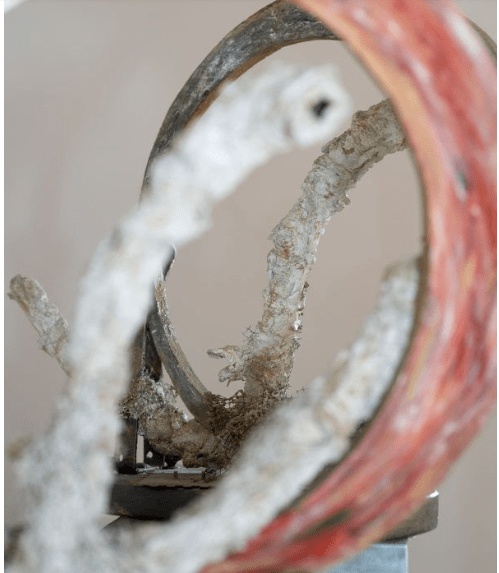
4 main characteristics of abstract sculptures
Abstract sculptures are defined by their ability to explore the physical properties of materials and their interaction with the environment. In this discipline, the artist focuses on the construction of structures that challenge common perception, using mass and emptiness to generate a unique spatial experience.
By focusing on elements such as volume and texture, the work becomes a physical presence that transforms the place where it is exhibited. The absence of recognizable figures allows geometry and light to become the main elements of the composition.
In contemporary production, figures like Núria have explored how rigid materials can acquire a sense of movement.
The use of geometry in these pieces provides a solid structure upon which visual dynamism develops.
These works invite a constant journey, where the viewer discovers that the piece changes radically depending on the angle from which it is observed, creating an infinite game of planes and shadows. They also present some aspects such as:
Mass and physical balance
Mass represents the density and visual weight of the structure. In Núria‘s designs, a balance is sought where solid matter seems to float.
By manipulating the weight of the materials, Núria manages to make the mass acquire an imposing presence without being visually exhausting or excessive.
Fluidity on continuous surfaces
Fluidity allows materials such as metal or stone to appear to transition from one state to another. By softening the joints and edges, the artist creates a continuous surface where the volume slides without interruptions, giving the work an organic and extremely harmonious appearance.
Dynamism and visual tension
Dynamism is the energy that the work projects despite its immobility. Through an asymmetric geometry, the piece suggests an internal force that seems to displace mass. It is a quality that keeps the observer’s attention alive, generating a constant sensation of change and movement.
Geometry as structural support
Geometry functions as the technical basis that allows the existence of complex shapes. The artist relies on proportion calculations to ensure that the volume is stable. Without this geometric base, the fluidity and dynamism could not be sustained, losing the coherence that defines the work.
3 types of Abstract Sculptures in Reluet
The study of typologies in abstract sculptures allows us to understand how an artist can transform inert materials into profound concepts. Currently, this discipline is divided according to the emotional and structural intention of the work, using volume and mass not as ends, but as means of expression.
Authors like Núria have explored how geometry can be broken to give way to forms that defy physical logic, creating pieces where dynamism is the absolute protagonist.
Each type of sculpture seeks a different impact on the viewer. While some pieces focus on stability and weight, others, under the Reluet concept, seek a visual lightness that seems to elevate the material.
The key lies in the symbolism given to each angle and curve, allowing the work to stop being a static object and become a three-dimensional message that actively inhabits the space. These are some references of the works of art created by Núria:
Fluidity sculptures
This type of work seeks to eliminate rigidity through the fluidity of continuous lines. The artist manipulates the mass so that it appears to melt into the environment, creating a soft dynamism. In Núria‘s collections, the volume becomes ethereal, using an organic geometry that invites relaxed contemplation.
Empowerment sculptures
Here, the abstract sculptures use the symbolism of verticality and strength. The mass appears imposing, projecting an energy of security. Through the use of Reluet and defined edges, a volume is achieved that claims authority, where geometry reinforces the idea of an unbreakable and powerful structure.
Resilience sculptures
These pieces represent the ability to adapt to stress. The artist combines materials that seem to bend without breaking, integrating fluidity and resistance. In this style, dynamism arises from the struggle between volume and external pressure, giving the geometry a character of survival and strength.